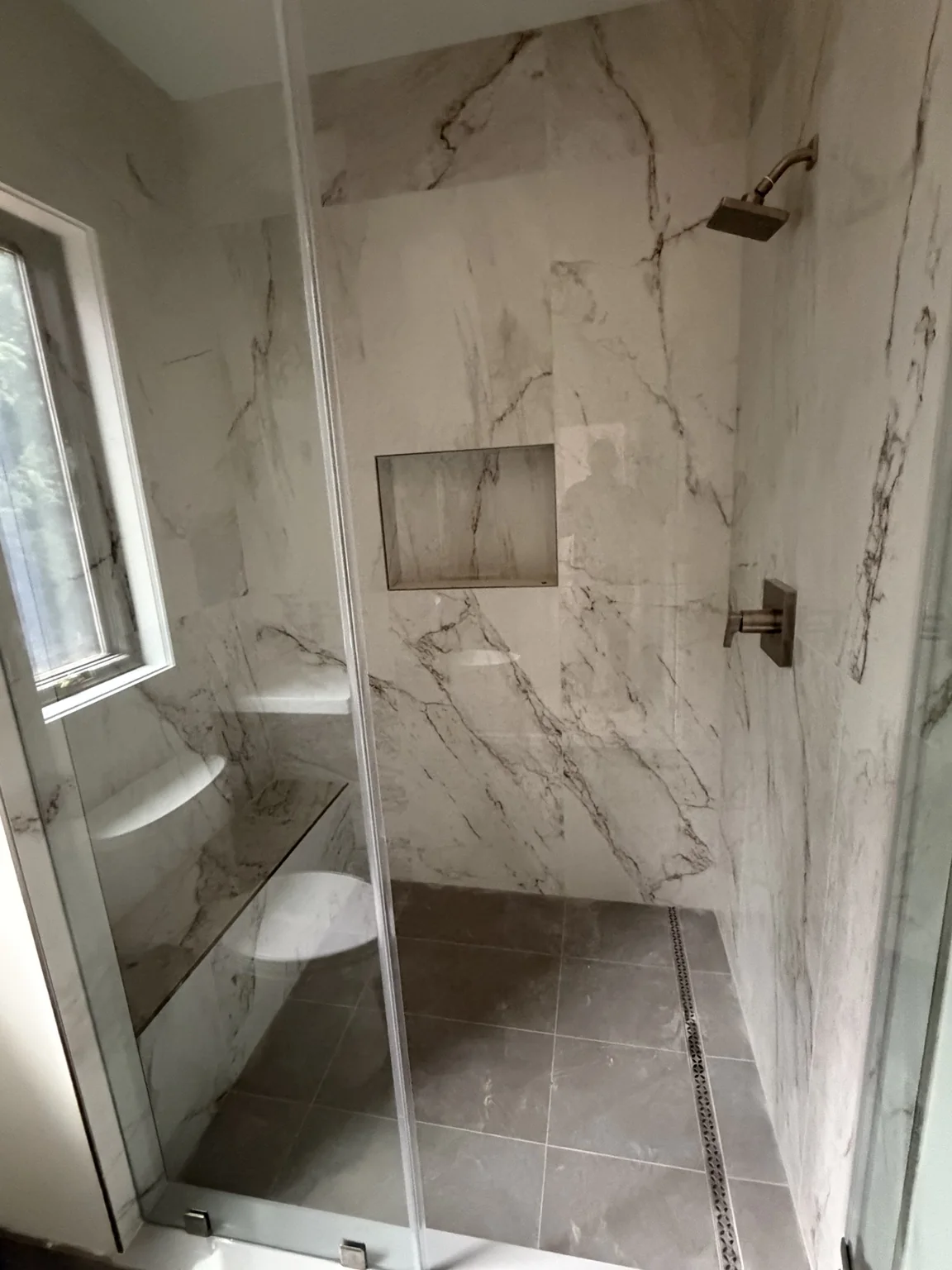
Natural stone is one of the oldest and most beautiful building materials we have.
It is also not a manufactured product.
That distinction matters enormously when you’re trying to finish a $10 million-plus house on a genuinely tight schedule.
On one of our current project-recovery jobs, we inherited a good example of exactly how natural stone becomes a schedule problem.
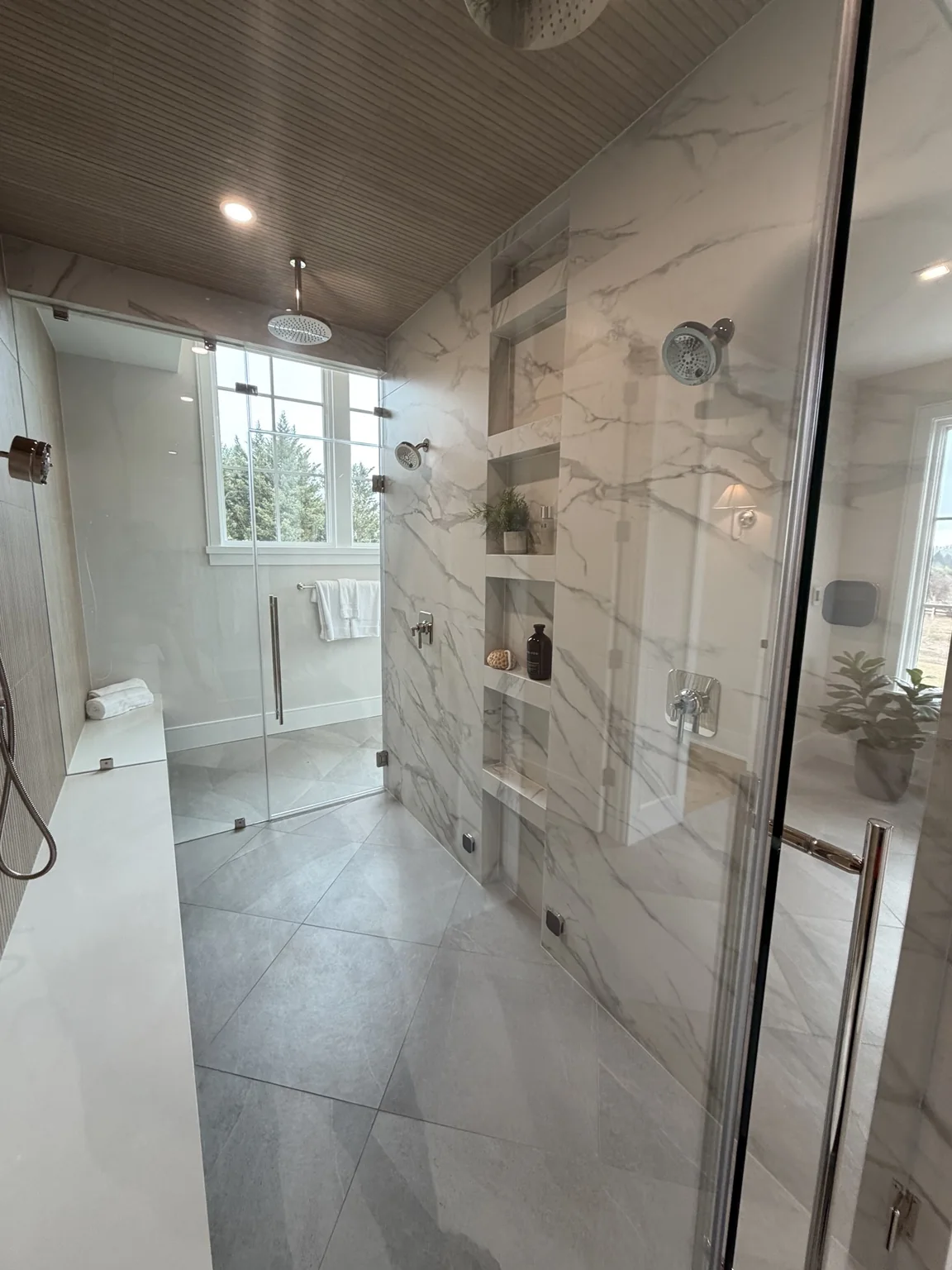
The house has an approved marble already being used in the bathrooms. But the master bathroom was left until last.
By the time we arrived, the secondary bathroom had consumed the remaining approved marble. The largest and most important bathroom in the house was still unfinished—and now we needed roughly 600 square feet to complete it.
The obvious answer sounds simple:
Order more of the approved marble.
Except this is natural stone.
We’ve now spent roughly a month trying to secure enough material that satisfactorily matches what was previously approved.
Fortunately, it hasn’t become the critical-path delay because this is a project recovery and plenty of other work is being corrected and completed simultaneously.
On a properly sequenced project with a compressed schedule, however, this could be devastating.
And the real mistake happened long before anyone discovered we were short 600 square feet.
The master bathroom shouldn’t get what’s left
If multiple rooms use the same variable finish material, procurement cannot be managed room by room.
The house has to be considered as a whole.
The secondary bathroom was able to proceed because the approved marble was available. That looked like progress—and technically, it was.
But construction progress isn’t simply completing the next available room. It’s understanding what today’s decision does to tomorrow’s work.
If the master bathroom requires 600 square feet of matching marble, consuming the approved material elsewhere without first securing that quantity simply transfers risk downstream.
Eventually someone reaches the master bathroom and discovers that the material everyone already approved is gone.
Now the project isn’t really ordering more tile.
It’s reopening a design decision everyone thought was closed.
The most important room in the house shouldn’t be built from whatever material happens to be left at the end.
Before the first piece of shared natural stone is installed, someone should know the total requirement for the house, the allocation to each area, appropriate waste and attic stock, and whether enough acceptable material from the approved lot has actually been secured.
That’s procurement.
Everything else is hoping there’s more later.
Natural stone isn’t an SKU
Two pieces of marble sold under exactly the same commercial name can look dramatically different.
Different blocks from the same quarry can vary. Different lots can vary. Individual pieces within the same lot can vary.
That’s not a defect. It’s part of what makes natural stone beautiful.
It’s also what makes it dangerous to treat like an ordinary purchase order.
In our case, we aren’t trying to find another box to finish a corner. We’re sourcing approximately 600 square feet for the master bathroom after the previously approved material has already been consumed elsewhere.
A supplier can find stone with the same name and dimensions. Technically, it can be the same product.
And it still may not look enough like the approved material to be acceptable.
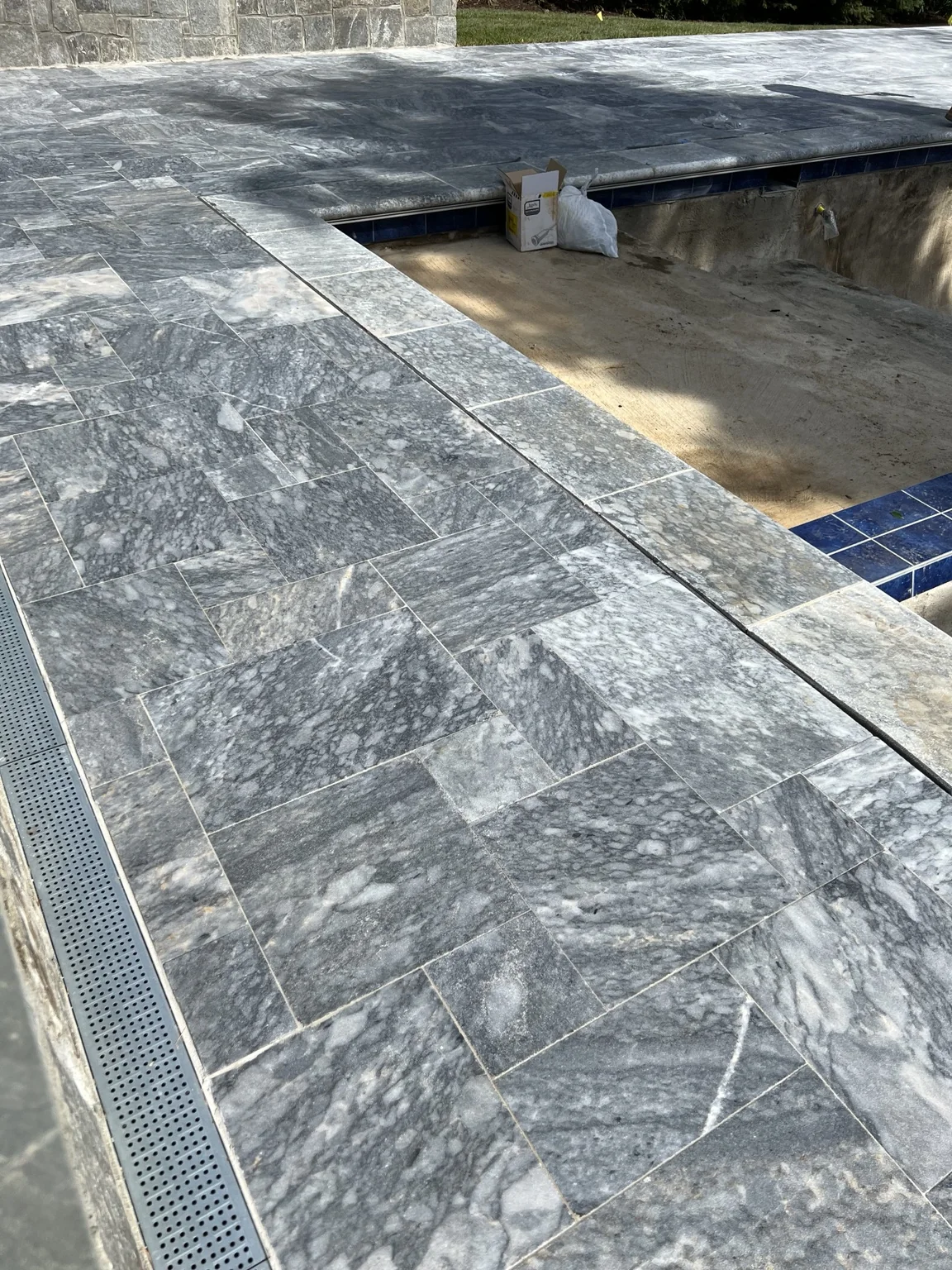
Now the architect needs to see it. The builder needs to see it. Photographs go back and forth. Someone doesn’t like the color. Someone else doesn’t like the veining. Another lot gets located. Samples get sent. Material gets returned.
The problem isn’t that anyone’s aesthetic judgment is unreasonable.
The problem is that a subjective material decision was allowed to become a field decision at the end of the project.
A fast project can’t afford that.
My family learned this on much bigger stone projects
My family has supplied and installed stone on nationally important projects, including work at the U.S. Capitol and the Washington Monument.
Growing up around that business gave me an interesting reference point for how seriously natural-stone procurement can be treated.
My uncle ran a multimillion-dollar stone company. He was the CEO—and he still personally selected important stone lots.
When a project warranted it, he would fly out to inspect the stone himself. Otherwise, he wanted photographs of the actual material being purchased.
Even the payment structure followed the physical stone.
The first payment was a deposit.
The second came when the actual lot was selected.
The final payment came after the stone shipped.
He understood something that can get lost surprisingly easily in modern construction management:
Specifying a stone and securing the right stone are two different things.
There is a good and bad lesson in how personally he controlled that process.
The good lesson is obvious: there was never any question about who cared whether the right stone showed up.
The bad lesson is that decades later, he still has to work.
A company doesn’t run itself if the CEO is the only person trusted to protect its standards.
The lesson isn’t that a builder should personally fly to a quarry whenever someone specifies marble.
It’s that the process has to preserve an owner’s level of accountability without requiring the owner to perform it.
Someone has to own the actual material.
Not the spreadsheet.
Not the submittal.
Not the purchase order.
The material.
On a $10 million or $20 million residence, someone should know which lot is being purchased, what it looks like, whether there’s enough of it, how much variation exists, which pieces can be rejected, what is being held in reserve, and whether the material in the warehouse can actually produce the installation shown in the drawings.
Because a salesperson saying, “I’ll reserve that lot for you,” isn’t the same thing as having the lot.
We recently had the somewhat ridiculous experience of being told a lot would be reserved for us.
Then the representative effectively disappeared for a month.
When we finally heard back, we were told they had been on vacation.
Someone else had reserved the lot.
It’s funny afterward.
It’s less funny when you’re trying to finish a house.
“We’re working on it” is not procurement.
Buy the stone before you need the stone
The solution isn’t particularly complicated.
If an important installation requires marble, limestone, travertine or another naturally variable stone:
Identify it.
Find the actual lot.
Inspect it.
Approve it.
Confirm there’s enough acceptable material.
Buy it.
Then warehouse it until you need it.
Don’t approve an important natural-stone installation solely from a small sample.
Open boxes. Pull random pieces. Look at different parts of the lot. If you’re buying slabs, inspect the actual slabs whenever practical.
If appearance matters enough that someone might reject pieces later, that review belongs at the beginning of procurement—not while an installer is standing in the bathroom waiting for an answer.
Warehousing costs money. So does purchasing material months before installation.
On a $10 million-plus project, both can be remarkably inexpensive compared with stopping several finish trades while everyone searches for another lot resembling something purchased six months earlier.
A sample is not an installation
Approving a product doesn’t mean you’ve approved the finished result.
A six-inch sample can tell you whether you generally like a color. It can’t tell you what 500 square feet of that color will feel like.
One piece of marble doesn’t show the range of an entire lot.
One heavily veined manufactured panel doesn’t show how four panels will interact across a wall.
And a sample doesn’t tell you what happens when the material turns a corner, enters a niche, meets another finish or gets interrupted by plumbing fixtures.
What we casually call “tile approval” can contain five separate decisions:
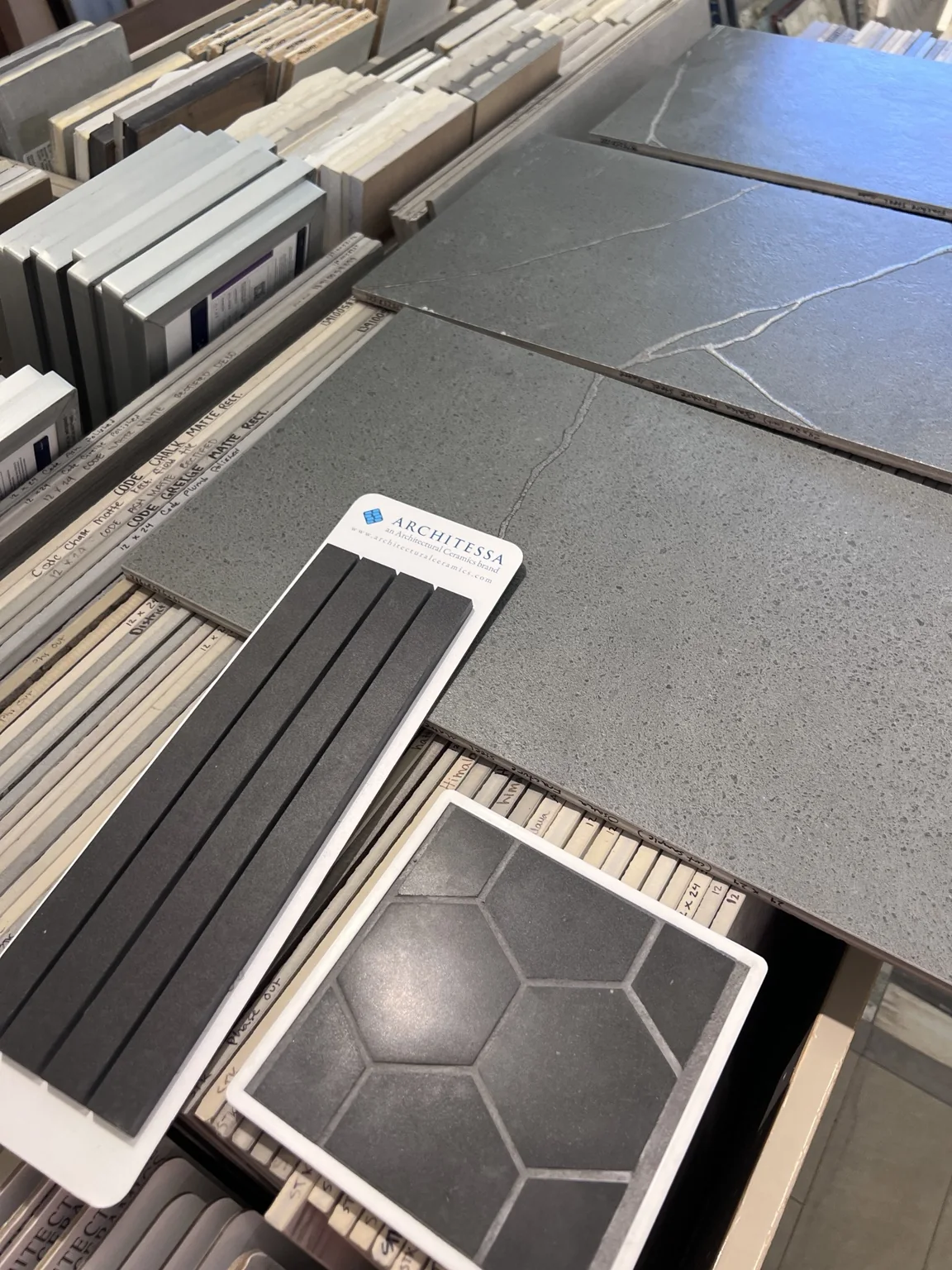
On a straightforward project, some can reasonably be combined.
On a highly customized $10 million-plus residence being built on a compressed schedule, they often shouldn’t be.
Because there is a broader principle here:
The more subjective a finish is, the earlier its decisions need to move in the schedule.
A beautiful material can still be the wrong material
There is another question that needs to come before procurement:
Is this actually a good material for where we’re putting it?
This is where I am probably less romantic about natural stone than some people in the industry.
I don’t particularly like specifying a material whose long-term appearance depends on everyone who touches it understanding its maintenance requirements.
If the wrong cleaning chemical can etch or discolor a finish, I want the owner to know that.
If the stone needs periodic sealing, I want the owner to know that too.
On a house designed to last generations, maintenance is not somebody else’s problem twenty years from now.
Maintenance is part of the specification today.
Sometimes the beauty and character of natural stone absolutely justify that burden.
Sometimes they don’t.
The material should earn the complexity it introduces.
I want to know what happens when it gets wet
I’m also generally reluctant to use highly polished marble on bathroom floors or other areas regularly exposed to water.
It can look extraordinary.
It can also become remarkably slippery when wet.
When I’m evaluating something like this in the field, I’ll sometimes do something extremely sophisticated:
I get the sample wet.
Then I feel it. Compare it with the dry sample. If appropriate, I’ll carefully evaluate how the surface behaves underfoot.
That’s not a laboratory slip-resistance test, and it shouldn’t replace documented testing when that information is important.
But it answers a useful preliminary question:
Do I immediately dislike what happens to this material when water gets on it?
Because that’s how the material will actually be used.
An architect, designer or owner may love a polished marble sample. From a field perspective, I still want to know what happens when somebody steps onto that same surface with wet feet.
The actual stone, finish, tile dimensions, joint pattern, location and documented wet-slip characteristics all matter.
But “it looks beautiful” shouldn’t end the material-selection conversation.
Neither should “it’s natural stone.”
Appearance matters.
So do durability, maintenance, installation, safety, availability and replacement risk.
They’re all part of properly specifying a finish.
Read the technical data before arguing about the grout joint
Manufactured tile introduces another set of issues that are easy to dismiss as installer preferences until you look at the product documentation.
Tiles aren’t simply a nominal dimension and a color.
Depending on the product, manufacturers provide information about dimensional tolerances, caliber, squareness, warpage or flatness, rectification, and recommended or minimum joint widths.
Some products also have directional markings or installation requirements that affect how the pattern is supposed to be assembled.
Those details matter enormously on a large installation.
A tiny dimensional discrepancy in one tile may be almost invisible.
Repeat it across a large floor or wall and the error accumulates.
Now grout joints begin wandering.
Lines stop aligning.
A pattern that looked perfect on an elevation starts drifting in the field.
Corners become harder to resolve.
Transitions no longer land where the drawings expected them to.
This is why I don’t particularly like resolving a grout-joint discussion with:
“We can’t make it that tight.”
Maybe we can’t.
But before accepting that answer, I want to know what the actual product is rated and recommended for.
If an installer wants a larger joint than the design calls for, there may be an excellent technical reason. The tile may have enough dimensional variation or warpage that the tighter joint simply isn’t appropriate.
Or the product documentation may show that the specified tile is manufactured to tolerances that permit the tighter joint.
Either way, we don’t have to guess.
Read the technical data.
The same applies to directionality.
If a tile has directional markings, pattern sequencing or a manufacturer’s prescribed orientation, that information needs to reach the people physically installing it.
Otherwise a product can be selected correctly, purchased correctly, delivered correctly—and still be installed incorrectly.
That’s an important distinction on high-end work:
Material selection doesn’t end when the material is approved. It ends when we understand how that specific material needs to be installed.
Dry lay it
This is another reason I like mockups and dry layouts.
For important natural-stone installations—and even some manufactured materials—sometimes the best technology available is a large clean floor.
Lay the pieces out.
Then look at them.
This piece is too busy.
Move that one.
Those two veins shouldn’t meet.
Rotate this one.
Reject that one.
Use this piece as the focal point.
Maybe the variation everyone loved in a six-inch sample looks chaotic across an entire room.
Great.
You discovered that while the material can still be moved.
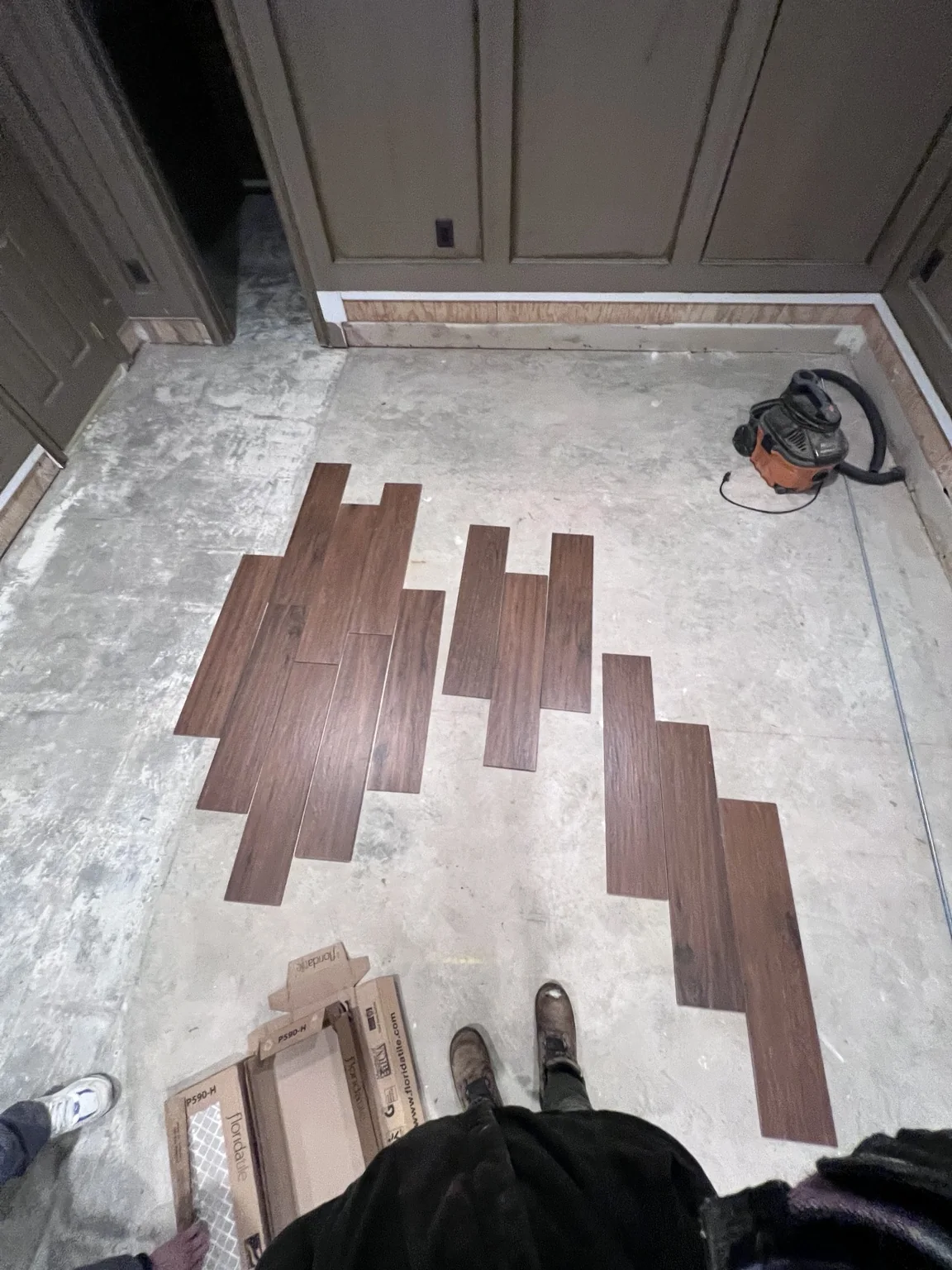
A dry layout can also reveal something less subjective: whether the design intent, the manufacturer’s tolerances and the realities of installation can actually coexist.
Aesthetic decisions are cheap before installation.
So are many technical ones.
They become expensive after the material is adhered to the wall.
This doesn’t need to become a month-long design exercise. Sometimes ten minutes with the installer, the actual material and a phone camera can prevent a decision that would otherwise require demolition to change.
On a house of this scale, that’s an easy investment to justify.
Manufactured doesn’t mean identical
I don’t want to oversell synthetic materials.
Porcelain, sintered stone and other manufactured products can still vary between production lots. Individual pieces can have intentional pattern variation. Large-format products can still arrive with a panel nobody particularly likes.
Manufacturing reduces variability.
It doesn’t eliminate it.
What it can provide is controlled variability.
A reputable manufacturer can publish tolerances. Dimensions and specifications can be known before ordering. Through the right suppliers, manufactured products are available in enormous slab formats.
If a product arrives outside its published specification, there is a defined conversation:
Replace it.
Reject it.
Or, in some circumstances, accept it with an appropriate adjustment.
Natural stone is different.
The marble isn’t defective because you don’t like the vein.
It’s marble.
The corner matters as much as the sample
Even manufactured material needs to be designed as an installation rather than selected as an object.
Take a large-format product such as Airslate used across a three-dimensional feature.
The owner shouldn’t just approve the face.
They should understand the corners, edge terminations, seam locations, pattern transitions, niches and adjacent planes.
And they should see what the actual pieces look like.
Someone may look at a panel and say:
“That one is really busy.”
Or:
“That pattern gives me a headache.”
That’s fine.
The problem isn’t having an opinion.
It’s discovering that opinion after installation.
If a panel bothers the owner while it’s sitting in the warehouse, replacing it is a procurement problem.
After it’s installed, it’s demolition.
Sometimes the cheapest insurance is one extra piece
Waste shouldn’t always be calculated solely as a percentage.
With large-format material, the right answer might simply be:
Buy one more piece.
An extra slab may let you reject an unattractive pattern, replace fabrication damage or recover from an installation mistake.
Most importantly, it may prevent an eight-week wait for another shipment.
On a house at this level, particularly with an owner sensitive to pattern and veining, an extra slab can be extraordinarily cheap insurance.
With natural stone, the argument is even stronger.
The next shipment may not merely take eight weeks.
The matching material may no longer exist.
Eight months versus three years
This is where a discussion about marble becomes a discussion about construction management.
If you’re trying to build a $10 million-plus house in eight months instead of letting it become a three-year project, you cannot wait until trades need materials to resolve material questions.
You can’t repeatedly:
Select it.
Order it.
Receive it.
Open it.
Show it to someone.
Discover a problem.
Send it back.
Order something else.
Wait.
That sequence consumes schedules.
A compressed project requires decisions to move forward.
Stone lots are secured while other construction is underway.
Long-lead manufactured materials may be ordered during framing.
Layouts are developed before installers arrive.
Corner conditions are resolved before fabrication.
Owners see the actual range of important finishes before those finishes become permanent.
Material is stored for tomorrow’s work instead of purchased in response to today’s emergency.
That changes the role of the project manager.
You’re no longer simply asking:
What does the site need today?
You’re constantly asking:
What will the site need eight weeks from today, and what has to happen now to make sure it’s waiting for us when we get there?
That’s how you compress a schedule without simply asking everyone to work faster.
Spec homes deserve a different calculation
On a fully custom residence, an owner may specifically want Calacatta marble because they love its variation, aging and character.
Great.
Natural stone can be extraordinary.
But the procurement strategy has to support the material.
A spec builder doesn’t have the same luxury. There may be no future owner available six months earlier to approve individual lots or decide whether a particular vein has too much movement.
In that environment, I lean more heavily toward high-quality manufactured materials when they can achieve the architectural intent.
Not necessarily because they’re cheaper.
Because they’re more controllable.
And because I don’t particularly like building unnecessary maintenance into a house when another material can deliver the design intent without it.
That’s not simply value engineering.
It’s risk engineering.
A manufactured product can still vary, have a long lead time, arrive damaged or contain a piece someone dislikes.
But you’ve reduced the number and magnitude of uncontrolled variables.
On a project with an aggressive completion date—and a house someone has to maintain for decades—that has real value.
“The tile guys are handling it” isn’t an answer. This is why.
Someone has to own the finish
Construction schedules rarely collapse because of one spectacular mistake.
They get eaten alive by small unresolved decisions.
The missing hardware.
The fixture nobody ordered.
The appliance requiring a different electrical connection.
The marble lot that doesn’t match.
The tile whose dimensional tolerances were never checked.
The pattern installed against its intended direction.
The large-format panel whose corner was never detailed.
The tile that’s eight weeks away because nobody ordered it during framing.
Each sounds minor.
Collectively, they’re the difference between finishing a house and perpetually almost finishing one.
The answer isn’t to stop using natural stone.
It’s to manage extraordinary materials accordingly.
Natural stone should be selected from the actual lot, inspected, purchased in sufficient quantity, laid out when appropriate, approved and stored before the project needs it.
Manufactured materials deserve the same thinking about lead times, lots, dimensional tolerances, patterns, grout joints, directionality, seams and details—even if manufacturing makes those variables easier to control.
And somebody has to own that process.
Not necessarily the CEO.
Hopefully not the CEO forever.
But someone.
Because on a truly well-managed high-end project, the installer shouldn’t arrive and begin discovering aesthetic or technical decisions that still need to be made.
The objective is for the installer to be putting up material that everyone has already agreed belongs there—and knows how it is supposed to be installed.
That is how a finish stops being a schedule risk.
And it’s one of the small differences between a house that keeps approaching completion and one that actually gets finished.
Heartstone Oversight works with owners and builders on complex high-end residential projects where schedule, quality and field execution have to be managed together. We identify decisions and dependencies early—before a finish-material question becomes a construction delay.