Leadership in construction is not standing at the edge of a jobsite telling everyone what to do.
It is knowing what needs to happen, understanding what is standing in the way, and removing that obstacle before it costs the project time.
Sometimes that means coordinating architects, engineers, inspections, subcontractors, procurement, and sequencing months ahead.
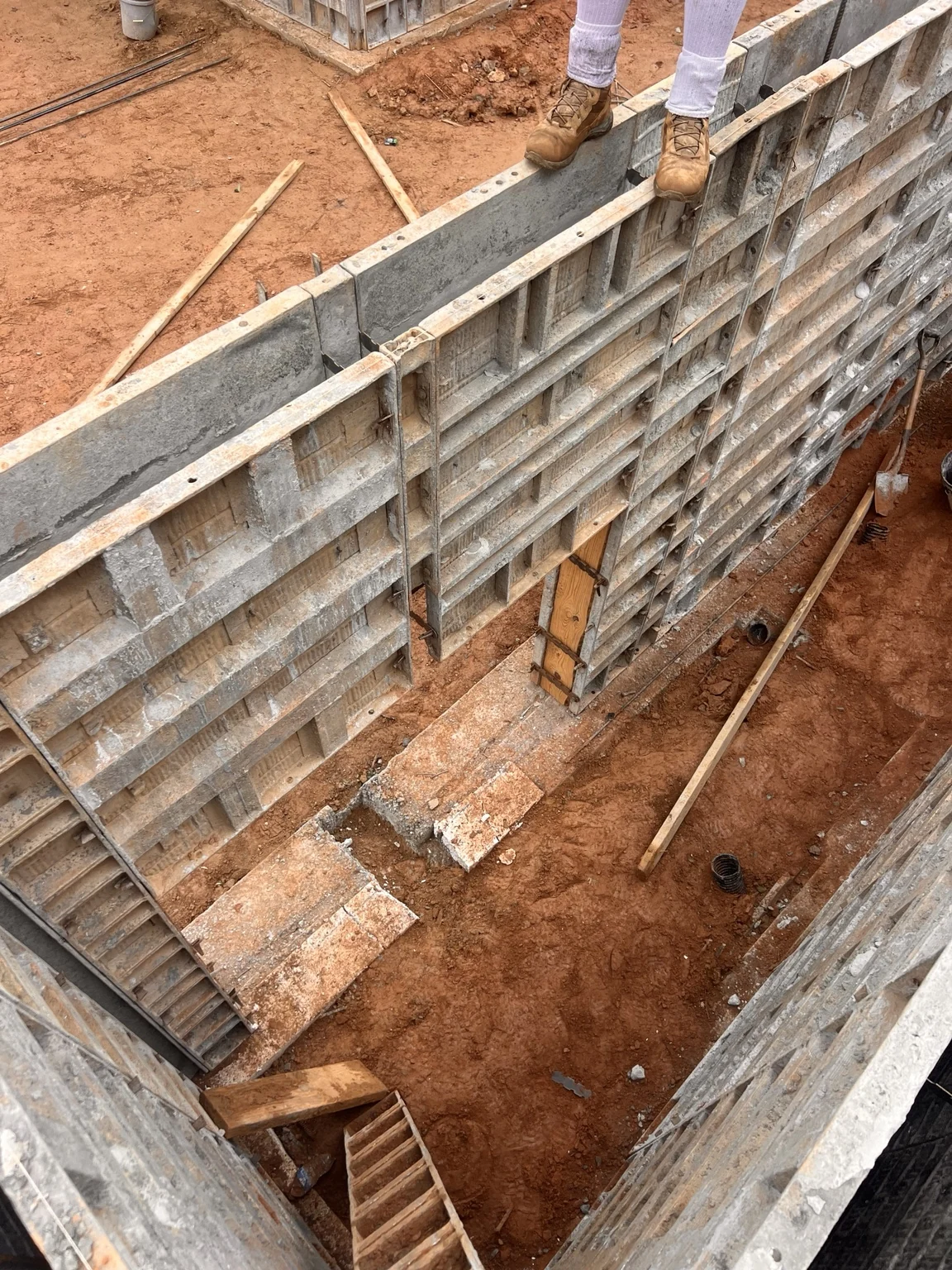
Sometimes it means being alone on a jobsite at six o’clock at night, after already digging for hours, because a change needs to be accommodated before a same-day concrete pour the next morning.
By then, the contingency was already in place. A strong plumbing crew had agreed to be there at 6 AM if the condition required a different solution.
I did not want to pull the concrete crew away from preparing the slab just to dig a hole. And if good plumbers were rearranging their morning to help on short notice, I did not want them arriving to discover that nobody had prepared the work.
Their time should be spent plumbing.
The concrete crew’s time should be spent preparing the pour.
My responsibility was to make sure both groups could arrive and execute.
So I kept digging.
That is leadership.
Not working harder for the sake of working harder.
Removing obstacles so everyone else can do their best work.

Listen Before You Lead.
Some of the most important information on a construction site comes from the people performing the work.
A laborer, carpenter, electrician, equipment operator, superintendent, or installer may see something nobody else has noticed.
Listen regardless of title, trade, seniority, or language.
If someone cannot easily explain something in English, meet them halfway.
Learn some Spanish.
Learn some Korean.
Learn some Mongolian.
Use a translator. Use your phone. Look up the words. Draw it. Walk the condition together.
You do not need to be fluent in every language spoken on a jobsite. You do need to care enough to understand what someone is trying to tell you.
Your responsibility is to understand what is actually happening.
Construction crews have very little patience for people who demand authority without first earning understanding. A leader who arrives barking orders without knowing the history of the problem or asking the people closest to the work what they are seeing quickly becomes an obstacle rather than an asset.
Ego is expensive on a construction site.
A five-minute conversation with the right person can prevent days of rework.
Make Sure People Know How to Succeed.
Luxury construction constantly puts experienced people into unfamiliar situations.
New products. New assemblies. Unusual dimensions. Custom fabrication. Specialized installation requirements.
You cannot simply tell someone the standard is high and expect perfect execution of something they have never done before.
On one project, a new framing crew took over a house that had been abandoned halfway through framing. Their window installer was experienced, but he had never installed the very large Quaker windows specified for the project.
So I scheduled a meeting before installation.
That conversation made it clear that there were product-specific details the installer needed to understand.
I then brought in Christian from Quality Windows, who had supplied the package and knew the product extremely well.
He walked through the details: stabilizing shim locations so the frames would not flex under their own weight, how the flashing flanges were attached in the field, handling requirements, support, and installation conditions.
He knocked it out of the park.
The framer should have been there too.
Not because he needed to install every window himself.
Because the person responsible for the work should understand enough to recognize whether it is being performed correctly after the expert leaves.
If only one installer receives the knowledge, the knowledge stays with one installer.
If leadership understands it too, the standard becomes part of the project.
Ask What People Need Before They Need It.
Before execution day, ask:
What do you need from us?
Do you have the right fasteners? Enough shims? The correct flashing? The equipment needed to move the units? Clear access? The right adhesives and sealants? Is there anything that could stop you once you begin?
Then follow the answers all the way through.
If there is uncertainty, resolve it before the crew arrives.
When practical, have extra material.
The expensive hours on a construction project are often the ones when five people are standing around because one component, one tool, or one unanswered question is missing.
Leadership means preventing those hours.
Know What Happened, What Is Happening, and What Happens Next.
A strong project leader should be able to answer three questions:
What happened?
How did we arrive here?
What is happening?
What work is underway, what decisions remain open, and what problems are developing?
What happens next?
What does today’s work affect tomorrow, next week, or six months from now?
Construction problems rarely exist in isolation.
Move one wall and you may affect framing, electrical, plumbing, HVAC, cabinetry, stone, trim, lighting, flooring, and inspections.
Leadership means seeing those relationships early.
Think Six Months Ahead.
The night before drywall, you should be mentally walking the house.
Is the backing correct? Are the plumbing locations right? Is the lighting coordinated with the architecture? Are electrical provisions missing? Are the cabinet dimensions coordinated? Are structural connections complete? Are waterproofing transitions right?
Is anything about to disappear behind a wall that someone will wish they had addressed six months from now?
Once the walls close, the cost of discovering a mistake changes dramatically.
Leadership means asking those questions while they are still cheap to answer.
Standards Require Communication.
People should know what the standard is.
But leadership cannot simply be:
“This is what I expect.”
It also has to include:
“Is what I am asking reasonable?”
There may be a fabrication limitation, sequencing issue, missing detail, or field condition you do not know about.
Asking does not lower the standard.
It gives the people doing the work an opportunity to explain what they are seeing.
Then you can make a better decision.
Get to the Bottom of the Question.
One of the most dangerous phrases in construction is:
“It should be fine.”
Maybe it is.
Find out.
If a structural detail looks unusual, understand it. If a waterproofing transition is questionable, investigate it. If a subcontractor says something cannot be done, understand why. If drawings conflict, resolve the conflict. If someone is installing an unfamiliar product, bring in the person who understands it.
Do not allow uncertainty to quietly become part of the building.
Leadership Is Personal Responsibility.
You may not perform every trade.
You may not design every detail.
You may not control every circumstance.
But if you are responsible for the project, you should feel personally accountable for understanding it.
For anticipating problems. For listening. For preparing people. For protecting their time. For communicating expectations. For maintaining standards.
And, occasionally, for being the last person on site with a shovel after hours of digging because tomorrow’s concrete pour depends on what happens tonight.
And there is a difference.